

I am going to draw a line in the first 100 words because getting this wrong costs people months. There is anxiety about a marriage, which is a specific dread attached to a specific relationship, and it is squarely coaching work. There is also an anxiety disorder, which is a mental health condition, and that is not mine to touch. It goes to a licensed professional. I am an ICF PCC coach. I do not diagnose, I do not treat, and I will not pretend the difference is blurry so that I can keep a client.
The reason this page exists is that most people searching this phrase are in the first category and have been quietly worried they are in the second. They are not describing symptoms. They are describing a situation. They wake up at 4am running the same loop about whether this marriage is the right one, whether they are the problem, whether the next 20 years look like the last 2. That loop has an address. It is attached to a person and a house and a set of unfinished conversations, and things with an address can be worked on.
Two different things share one word
The distinction I use is simple and it is not a diagnostic test. It is a question about where the dread points.
Coaching work
A licensed professional leads
The dread has an address. It is about this person, this house, this decision.
The dread is not attached to a situation. It arrives on good days for no reason you can name.
It quiets down on a good weekend and returns Sunday night.
It does not respond much to what is actually happening in the week.
You can say the specific sentence you are afraid of.
There is no specific sentence. There is just the feeling.
It started when something in the marriage changed.
It predates this relationship and has followed you through others.
That is a rough sort, not a verdict, and plenty of people sit in both columns. If a licensed professional is already treating something, I am happy to work alongside that on the marriage side. What I will not do is take the lead on a condition. If you want the longer honest comparison between the two routes, I wrote it in marriage therapy vs marriage coaching.
Where I hand it over
-
A diagnosed or suspected condition
If a mental health condition is driving this, a licensed professional leads and I am glad to work alongside them on the marriage. Coaching first is building on sand.
-
Abuse of any kind
Physical, sexual or emotional. Safety is not a coaching conversation and I will not treat it as one.
-
An active addiction
Until that is being treated, marriage work will not hold and both of you will end up blaming the wrong thing.

What the coachable version sounds like
This is not a symptom list. It is what people actually say to me in the first 10 minutes, and the reason I am reproducing it is so you can hear that none of it is exotic.
What people actually say
-
I love him and I still feel like I am running out of time.
-
I keep waiting to feel sure and the sure never arrives.
-
Every Sunday night I do the math on whether I would leave.
-
I am fine all day and then I pull into the driveway.
-
I do not know if I am unhappy or just tired.
-
We are 8 years in and I have started imagining being 60 and it scares me.
Notice what all of those have in common. They are situational, they have an address, and every one of them is a sentence that has never been said out loud to the other person in the house. That last part is not a coincidence. Almost all of this dread is being held privately by somebody who has decided that saying it would be an act of cruelty. Holding it is the crueler option, it just takes longer to prove.
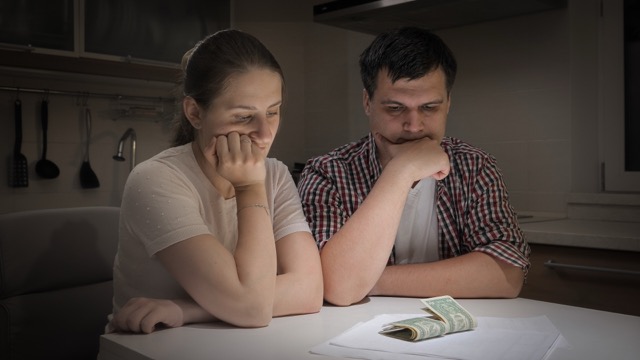
Where it usually comes from
In my practice the same few sources come up over and over, and none of them are character flaws.
The first is an unmade decision. Something got postponed, a job, a move, a second child, a boundary with a parent, and the postponement never ended. Unmade decisions do not sit quietly. They convert into background dread and then attach themselves to the nearest available object, which is usually your spouse.
The second is a story you have never checked. You decided at some point what your partner thinks about you, or about the marriage, and you have been living inside that conclusion without ever running it past them. People will carry a private verdict for years rather than risk hearing it confirmed. Then it turns out to be wrong, and the relief is almost violent.
The third is the ordinary cooling that every long relationship goes through, read as a verdict. The early chemistry was always going to settle. Reading that settling as proof that you married the wrong person is what actually generates the panic.
Do not make a permanent decision in a temporary state
Nobody should decide the shape of the next 20 years at 4am on a Sunday, on 5 hours of sleep, in the third month of an unmade decision. Get the decision made first and then see what is still true.

What we actually do about it
It is not reassurance. Reassurance is the thing that has already failed, usually many times, because reassurance answers a question the anxious person has not actually asked yet.
How this usually runs
-
Name the sentence. The specific one. Not I am anxious about us, but the actual line you are afraid is true. It is almost always shorter and less dramatic than the feeling around it.
-
Test it against reality instead of against 4am. Most of these sentences have never been checked with the one person who could confirm or kill them in 30 seconds.
-
Find the unmade decision underneath and make it. Not perfectly, just made. Dread feeds on open loops more than it feeds on bad news.
-
Build the thing you are actually missing. Usually it is not certainty. It is contact, or a say in how the next 2 years go, or one hour a week that belongs to the two of you.
The part people find hardest is step one, because saying the sentence out loud in front of your spouse feels like detonating something. In practice, in a room with someone whose job is to keep it from turning into the fight that ends things, it lands far softer than anyone predicts. That is most of what the room is for.

If you are the other spouse
Plenty of people find this page because their partner is the anxious one. Two things worth knowing. First, arguing with the dread does not work, and the harder you argue the more the anxious person concludes you have not understood the problem. Second, this is workable even if only one of you comes in at first. We work on your half of the pattern, which is the only half you control anyway.
What I will not do is coach one of you on how to manage the other. That is not coaching, and it surfaces later as a betrayal of its own. If the anxiety in your house has been converting into a running argument, how to stop constant arguing is the more useful page.
Reassurance keeps failing because it answers a question the anxious person has not actually asked yet.
Matthew W. Hoelscher, PCC

Whether I am the right room
I would rather rule you out than take your money. If you want to see the honest breakdown of who I work with and who I turn away, it is on who I actually work with. The short version is that I take couples and individuals whose worry is about a relationship, at every stage from dating to retirement, and I refer out anything clinical without hedging.

Talk it through
If the dread has an address and you are tired of carrying it privately, book the free 25 minute call. It is for first timers, it costs nothing, and its only job is to work out whether I am the right person or whether you need a licensed professional instead. If it is the second one, I will say so on that call.

Questions couples ask
Is marriage anxiety a mental health condition?
Anxiety about a marriage and an anxiety disorder are two different things that share a word. Dread attached to a specific relationship, a specific decision or a specific unfinished conversation is situational and it is what I coach. A diagnosable condition is not mine to work with. I do not diagnose and I do not treat. If a licensed professional is involved or should be, they lead and I am happy to work alongside them on the marriage.
Should I tell my spouse I have been feeling this?
Almost always yes, and almost always sooner than you want to. People hold these sentences for years believing that saying them is the cruel option. In my experience the holding is what does the damage, because your partner can feel the distance and has already written their own explanation for it, which is usually worse than the truth.
Does this mean I married the wrong person?
It usually means something in the marriage has gone unnamed, not that the choice was wrong. The early intensity of any relationship was always going to cool. When people read that cooling as a verdict on the decision, the panic follows. That is a story problem, and stories can be checked.
Can I come in without my spouse?
Yes, and a lot of people start that way. We work on your half of the pattern, which is the only half you actually control. What I will not do is coach you on tactics for managing your partner. Most spouses join within a few sessions once they see this is a conversation rather than a trial.