

Every February and every anniversary I get some version of the same question, usually from a husband, usually three days out. What should I get her. And underneath that question is a much better one that he has not asked out loud: why did last year's gift not do what I hoped it would do. He spent real money. She said thank you. The evening still felt like two coworkers being polite.
I am not going to tell you gifts do not matter, because that is the kind of thing people say when they want to sound wise and it is not true. Objects matter. They just cannot carry a weight they were never built to carry. So this page is two things. First, the reason your gift keeps landing softer than you expected. Second, a short list of things you can actually do, most of them costing very little, that in my experience land far harder than the box.
Why the object almost never lands
A present is a piece of evidence. That is its whole job. It is supposed to prove that you have been paying attention to a specific person over a period of time. When the gift is generic, the evidence points the wrong way. She opens a box, sees something perfectly nice, and what she reads off it is that you went to a store and solved a problem. Nobody feels cherished by a solved problem.
This is why the same $300 goes so differently depending on what it is attached to. A necklace bought because it was on the display near the register says one thing. A necklace in the exact shade of the dress she wore the night the two of you got stuck in the rain in the Keys says something else entirely, and it costs the same. The price never changes the message. The specificity does.
The second reason is timing. Most gifts arrive on the two days a year the calendar demands one, which means the gift is competing with the calendar for credit. She knows the date told you to do this. That does not make it worthless, but it does cap it. Attention that only arrives on schedule reads as compliance, not desire.
Why it lands soft
-
It is generic
A good gift is proof you noticed something specific about one person. A category gift, jewelry because women like jewelry, proves only that you know the category.
-
The calendar asked, not you
When a gift arrives on the one day of the year it is required, the date gets the credit. Something small in the middle of March gets all of it.
-
It is a substitute, not an addition
If the object is doing a job that six months of attention should have been doing, it will buckle. No box is that strong.

What your partner is actually asking for
When I ask couples in my office what they actually want from each other, almost nobody says an object. What comes out, over and over, is some version of I want to be thought about when I am not in the room. That is the whole thing. Everything else is packaging for it.
Two people who are 8 years and 2 kids into a marriage are not starved for stuff. They are starved for evidence that they are still a person to each other and not a logistics partner. Somebody who still notices what they are into, what they are tired of, what they gave up quietly and have not mentioned since. This is also the reason gift giving as a personality category gets you only so far, which is part of why I am hard on the tidy five categories model in the problem with 5 love languages. The category tells you the format. It never tells you the content, and the content is the entire message.
There is a version of this that is not about romance at all. It is about the slow flattening that happens to two good parents who have not had an unstructured hour together since the first baby, which is most of what I mean when I talk about the parent marriage. If that is your house, the best gift on any list here is time that is genuinely yours, protected on purpose, without a toddler negotiating in the background.
Nobody has ever felt cherished by a solved problem.
Matthew W. Hoelscher, PCC
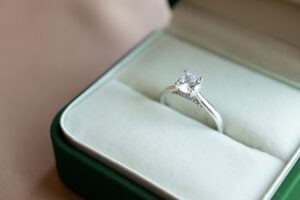
Real ideas that cost close to nothing
I promised concrete, so here is concrete. Every one of these has come back to me from a real couple as the thing that worked, and none of them require a good month.
Give a night fully off duty. Not a night where you help more. A night where you take the entire operation, bedtime included, and your partner leaves the house with no return time and no phone check ins. Most people carrying the household load have not had four consecutive hours of nobody needing them since before the wedding.
Do the logistics, not just the outing. Half of what makes a night out feel like a gift is that somebody else did the arranging. Pick the restaurant, book the sitter, put it in the calendar, tell her what time to be ready. The dinner is not the present. Being the one who did not have to organize it is the present.
Give back something they quietly dropped. The guitar. The Saturday run. The friend they stopped seeing when the second baby came. Say the specific thing out loud: I got the sitter for Thursday, go play, I have it. Handing somebody back a piece of the person they were before is the most generous thing on this list and it costs a sitter.
Write down what you noticed. Not poetry. Five specific things they did this year that you saw and never mentioned. The Tuesday she handled the fever alone while you were traveling. The way he sat on the floor with your son for 40 minutes over a broken toy. Specific beats beautiful every single time, because specific cannot be faked.
Take a 30 minute walk with no agenda, once a week, every week. Sounds like nothing. Ask any couple who has actually done it for a season what it did to them.
What couples told me actually worked
-
He booked the sitter, the table and the babysitter's ride home, and told me what time to be ready
-
She gave me a Saturday morning back and did not once ask what I did with it
-
A list of five things he had noticed me do that year, written on a hotel notepad
-
He took the 6am wake up for a month without turning it into a discussion
-
She found the record I sold when we moved and bought it again
-
We started walking after dinner and now nobody skips it

Buy the chocolate anyway
Now the part where I stop being profound. Buy the flowers. Buy the chocolate. Get the earrings if she has been looking at earrings.
I am not asking you to replace objects with sentiment. Sentiment on its own gets tedious, and a partner who announces that his presence is the real gift is insufferable. The object is fine. The object is good. It just needs to arrive attached to something that proves you were paying attention, and it needs company during the other 51 weeks of the year.
The failure mode I actually see is not men buying gifts. It is men buying gifts instead of showing up, then feeling ambushed when the gift does not repair five quiet months. That is not a shopping problem and no upgrade fixes it. If the distance has been building for a while, gifts are the wrong tool entirely and I would rather you look honestly at where the love and desire went.

The gift that beats all of the others
If I could get every couple to do one thing from this page, it would not be any single present. It would be the recurring one.
Pick something small, make it regular, and do not miss it. Coffee brought to her before she is fully awake, every weekday. The walk after dinner. Friday night after the kids are down with both phones in a drawer. A repeating small thing tells your partner something no single purchase can tell them: that you are still choosing this, on a Tuesday, when nothing is asking you to.
Big gestures are easy to admire and easy to forget. The thing that changes a marriage is the boring, repeated, unglamorous evidence that you are still in it on purpose. This is the same reason the drift I see in most couples is not caused by any dramatic event. It is caused by 300 small choices nobody registered, which is what I get into in how desire fades naturally.
Setting up the recurring one
-
Pick something you will genuinely keep. A ritual you resent by week three is worse than no ritual.
-
Attach it to something that already happens. After dinner, before the alarm, Friday once the kids are down. Habits need a hook.
-
Protect it out loud. Say to your partner that this is now a thing, so it is not a surprise every week and does not require negotiating.
-
Do not grade it. The moment you are keeping score of who kept it, it stops being a gift and becomes an obligation with paperwork.
-
Keep it when it is inconvenient. That is the entire point. Anyone can do it on a good week.
Talk it through
If you read this and recognized that the gift was never really the issue, that is worth a conversation. Book a free 25 minute call. It is for first timers, it costs nothing, and all I am doing on it is working out what is actually happening in your house and whether I am the right person for it.
Questions couples ask
So is it wrong to buy an expensive gift?
Not at all. Buy it if you want to and can. My only point is that price is not the variable that makes a gift land. Specificity is. A $40 present that proves you have been paying attention to one particular person all year will beat a $400 present chosen from a category every time. If you can do both, do both.
My partner says they do not want anything. Do I believe them?
Believe that they do not want an object. Do not believe that they want nothing. In my experience that sentence almost always means please do not spend money we do not have on a thing I will have to find a place for. Time, a night genuinely off duty, or something specific they mentioned wanting six months ago all sit outside what they are declining.
We are broke this year. What do I do?
Some of the best gifts on my list cost the price of a sitter or nothing at all. A night fully off duty, a written list of specific things you noticed, giving back an hour they used to have for themselves. Couples remember those years fondly far more often than they remember what was in the box during the good years.
Can a gift fix a marriage that is in trouble?
No, and expecting it to is how a decent gift ends in a fight. If there is real distance between the two of you, a present arrives into that distance and gets read through it. Deal with the distance first. That is a conversation, and usually more than one.